<img height="1" width="1" style="display:none;" alt="" src="https://px.ads.linkedin.com/collect/?pid=5838642&amp;fmt=gif">
The Future of America's Young Readers Depends on Oral Language

Discover why oral language is the missing piece in reading instruction

Are you seeing students struggle to follow instructions, express their ideas, build vocabulary, or understand what they read? What may look like separate challenges can often have a common thread: oral language.

Schools have made important progress in strengthening phonics and decoding instruction. But becoming a skilled reader requires more than reading the words on a page - children also need the oral language skills to understand what those words mean.

Our whitepaper explores why oral language should play a more intentional role in early literacy, and how it can complement the approaches schools already have in place.

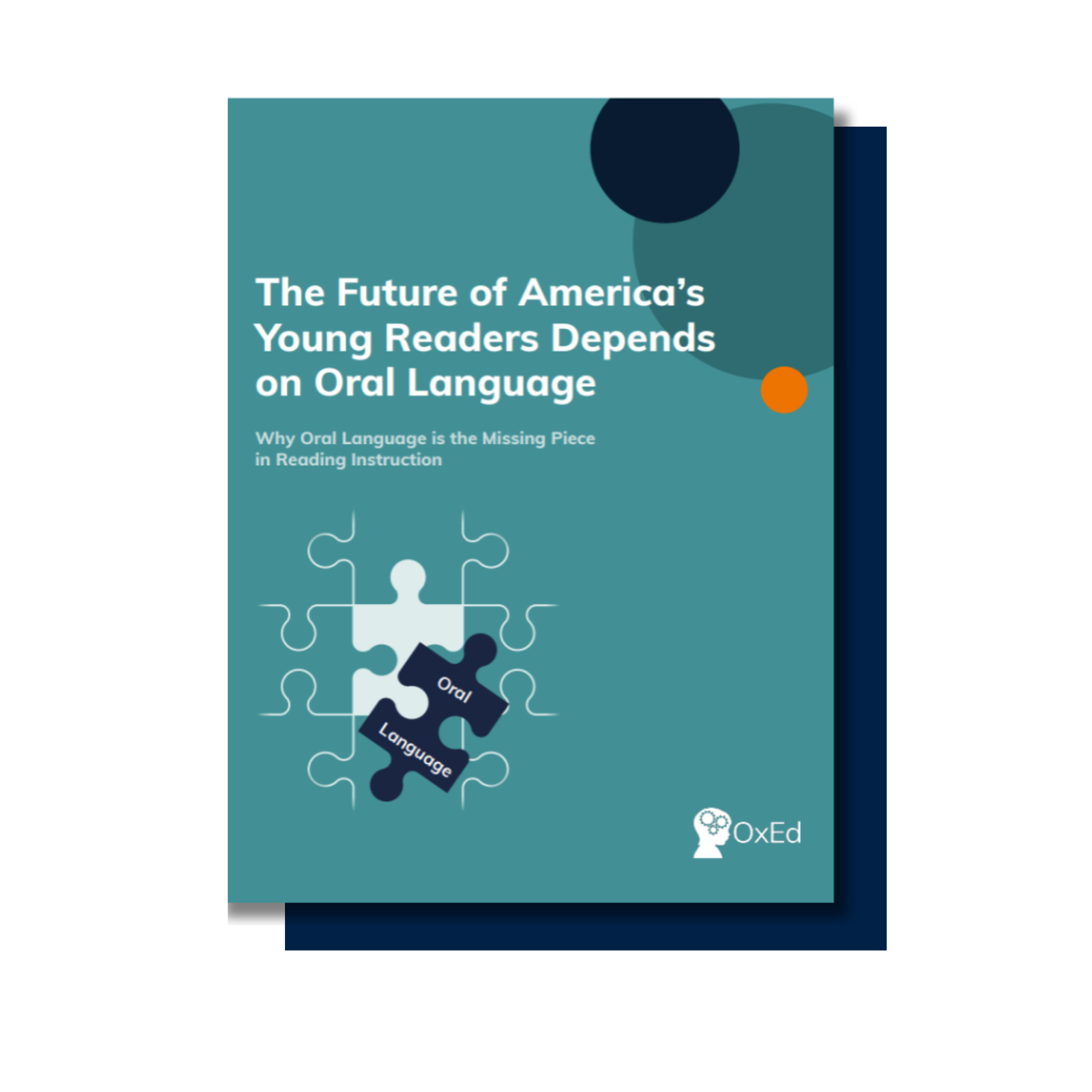
Whitepaper front cover (1)


Reading starts with language

Before children encounter written words, they spend years building vocabulary, following conversations, telling stories, asking questions and expressing ideas. Reading builds on these oral language foundations.

INSIDE THE WHITEPAPER, DISCOVER:

Book icon

Why oral language is foundational to literacy

and its role in reading comprehension
Vocab icon

Why oral language needs can be missed

until the demands of learning increase

People icon

How schools can strengthen oral language intentionally

through practical strategies, screening, instruction and targeted support

Strong language. strong readers.

Discover how giving oral language greater intentional focus can help build the foundations children need for reading and learning.