The National Year of Reading – what reading means to OxEd
Reading means something different to everyone. Our team shares what reading brings to their lives, along with some favourite reads.
.png?width=1500&height=500&name=NYOR%20Header%20(4).png "NYOR Header (4)")
The National Year of Reading 2026 is a movement to help people (re)discover the joy of reading.
OxEd are proud to support this national moment by bringing together research, insight and practical ideas that highlight the central role of language in reading.
According to the National Literacy Trust, just 1 in 3 (32.7%) children and young people aged 8 to 18 said they enjoyed reading in 2025, the lowest level since 2005.
It’s more important than ever to ‘Go All In’ on reading. With so many engaging and flexible ways for schools to take part, you can spark a genuine love of reading in every classroom and build a thriving, whole-school reading culture.
Access free resources to help stories thrive in your school setting:
.png?width=1469&height=2000&name=Untitled%20design%20(6).png "Teacher reading to children")
.png?width=2000&height=66&name=Untitled%20design%20(4).png "Untitled design (4)")
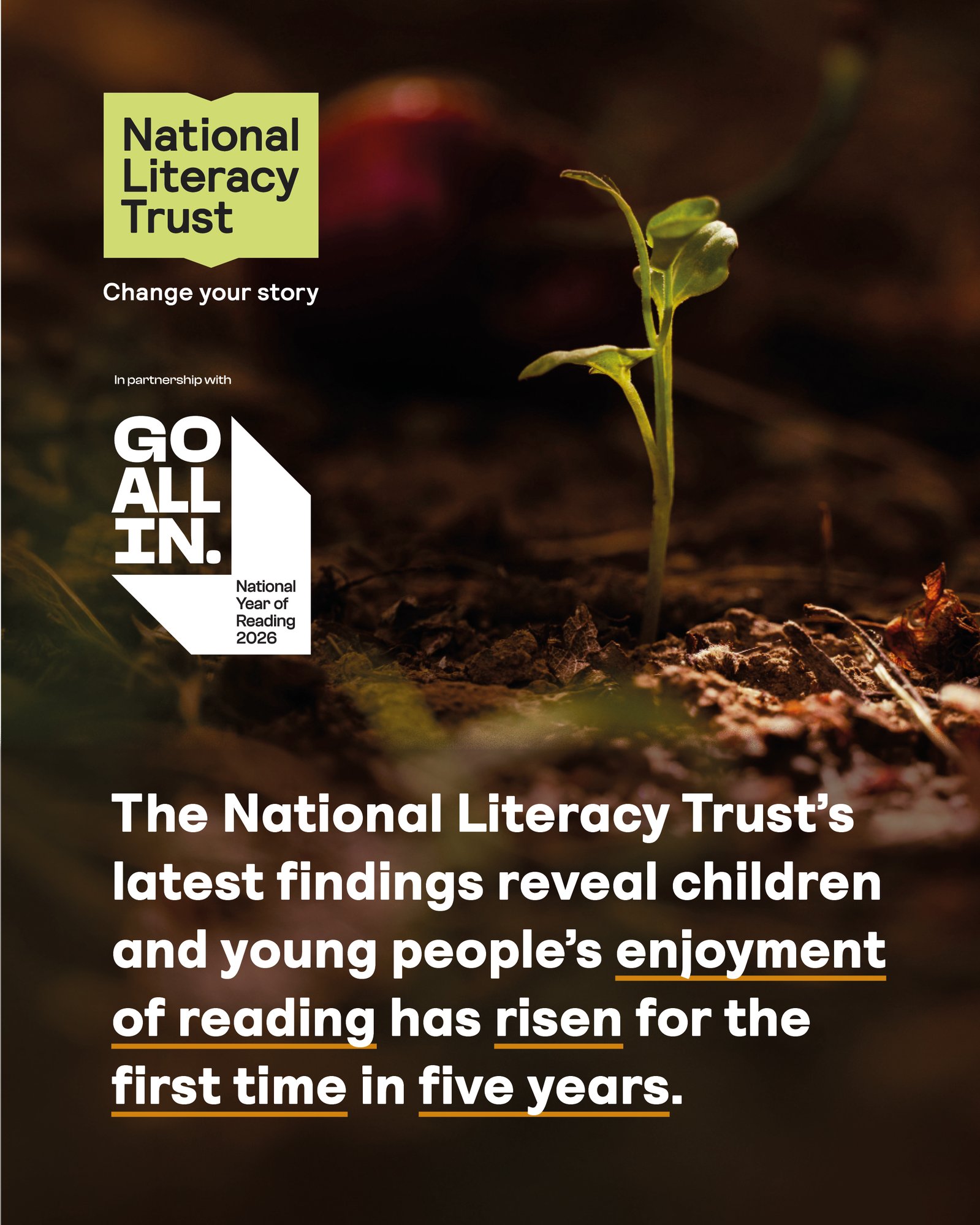
New research from The National Literacy Trust shows a modest upturn in children and young people's reading enjoyment after a 20-year low. While encouraging, reading enjoyment levels are still worryingly low. To keep those green shoots growing, we must continue championing reading for enjoyment at home, in schools and across communities.
Reading means something different to everyone. Our team shares what reading brings to their lives, along with some favourite reads.
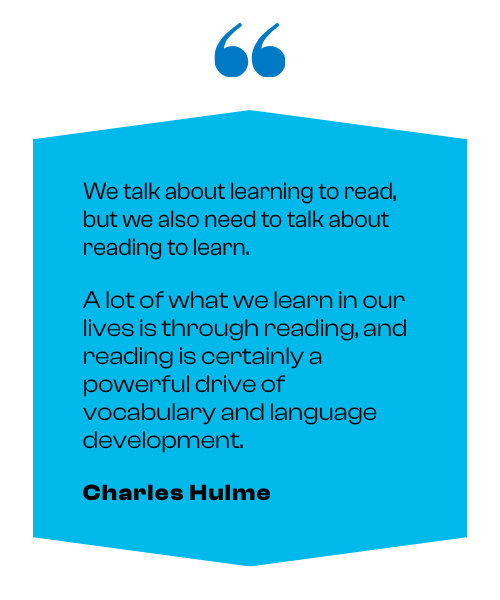
The Reading is Language model, developed by researchers Maggie Snowling and Charles Hulme, shows that oral language skills play a crucial role in how children learn to read.
For children with a family history of dyslexia or from lower-income backgrounds, regular story sharing at home can make a meaningful difference to how well they learn to read.
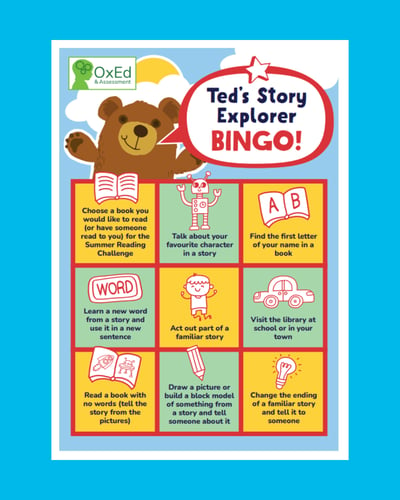
Encourage oral language skills and a love of storytelling with this free summer-themed bingo card for Reception and Early Years children.
Guided by Ted, the NELI programme mascot, Story Explorer Bingo includes nine simple, engaging language activities that children can complete at school or at home, at their own pace.

Subscribe to our National Year of Reading newsletter for the latest research and practical ideas for supporting reading, straight to your inbox.
Reading for pleasure doesn’t begin with a book. It begins with language.
When people feel confident talking, listening and sharing ideas, reading becomes easier to access and easier to enjoy. Our research shows that strong oral language underpins positive reading experiences at every age.
That’s why, during the National Year of Reading, we’re shining a light on the essential (and often overlooked) connection between language, confidence and reading enjoyment.
Teachers see it every day: some pupils love reading, while others feel unsure, disengaged or convinced it isn’t for them.
Research shows that enjoyment of reading is closely linked to oral language ability. When children feel able to talk, listen and express ideas, they’re more likely to engage with texts and develop positive reading habits.
The National Year of Reading offers a chance to focus on what helps reading flourish: strong language foundations.
In school and beyond, reading looks different for every pupil. When pupils see their interests reflected in what counts as reading, motivation and engagement grow.
That’s why we champion a broad, inclusive view of reading, including:
Stories read aloud and shared as a class
Lyrics and scripts
Comics, graphic novels and magazines
Audiobooks, podcasts and digital texts
The year is shaped by national moments that schools can use to celebrate reading in purposeful, low-pressure ways.
Each moment is an opportunity to connect reading with language, enjoyment and pupils’ wider interests.
the Summer Reading Challenge helps children keep reading over the summer, building confidence and setting them up for a great start to the new school term in the autumn.
Children set their own reading goal and earn rewards for reading whatever they enjoy. They can sign up at their local library or online – and it's completely free to take part.