<img height="1" width="1" style="display:none;" alt="" src="https://px.ads.linkedin.com/collect/?pid=5838642&amp;fmt=gif">
Intentional language instruction

Simple ways to make oral language part of everyday learning

Oral language develops through the conversations and interactions children experience every day. By being intentional about these opportunities, educators can support children to develop the speaking, listening, and language skills that underpin learning and literacy.

Explore practical ways to bring oral language into everyday classroom interactions. 

Start with good listening

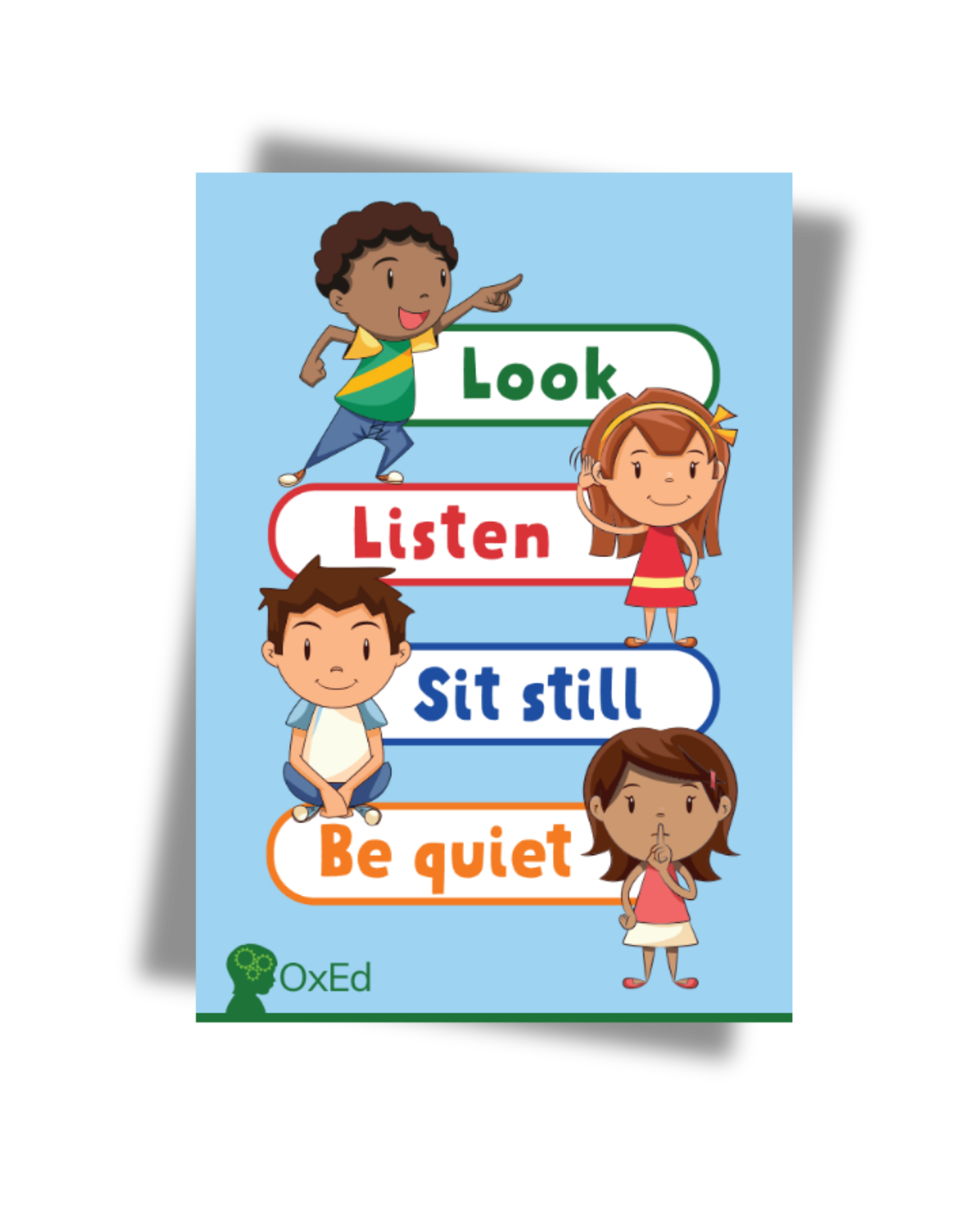
Listening is an important part of oral language and communication. Helping children understand what good listening looks like gives them clear expectations for conversations and group activities. 

Look

Look at the person who is talking.

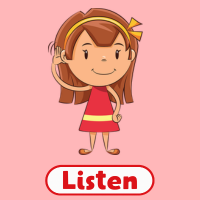
Listen

Listen carefully to what they are saying.

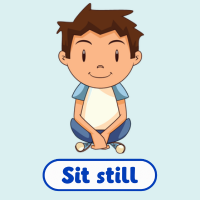
Sit still

Keep your body still while you are listening.

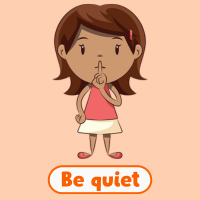
Be quiet

Be quiet when someone else is talking.

Listening rules poster

Download your free Listening Rules poster

Keep the four rules visible in your classroom and refer back to them during conversations, group activities, and everyday learning.

Make language intentional throughout the day

Supporting oral language doesn’t always require a separate lesson. Every day interactions can provide valuable opportunities for children to hear, practice, and develop language.

Talk icon

Create opportunities for purposeful talk

Give children regular opportunities to talk, not only to answer questions. Encourage them to explain their thinking, describe experiences, share ideas, and have conversations with adults and their peers.
Vocab icon

Build and revisit vocabulary

Introduce new words in meaningful contexts and give students opportunities to hear and use them again. Revisiting vocabulary across different activities and conversations can help children develop their understanding of new words.
Time icon

Give children time to respond

Some students need longer to process a question and formulate their response. Allow thinking time before stepping in or asking another question, giving children more opportunity to contribute.
Question icon

Use questions to extend conversation

Use a mixture of questions and comments to keep conversations going. Open questions such as “What do you think will happen next?” or “Why do you think that?” can encourage children to give more detailed responses. 
Book icon

Make the most of shared reading

Books provide rich opportunities to introduce vocabulary, talk about characters and events, make predictions, and encourage students to explain their ideas. Make reading interactive by creating space for conversation around the story. 

Talking icon

Model rich language

Children learn from the language they hear around them. Model clear sentences and varied vocabulary, and build on what students say by adding information, detail, or new language.

Use PEER and CROWD techniques during shared reading

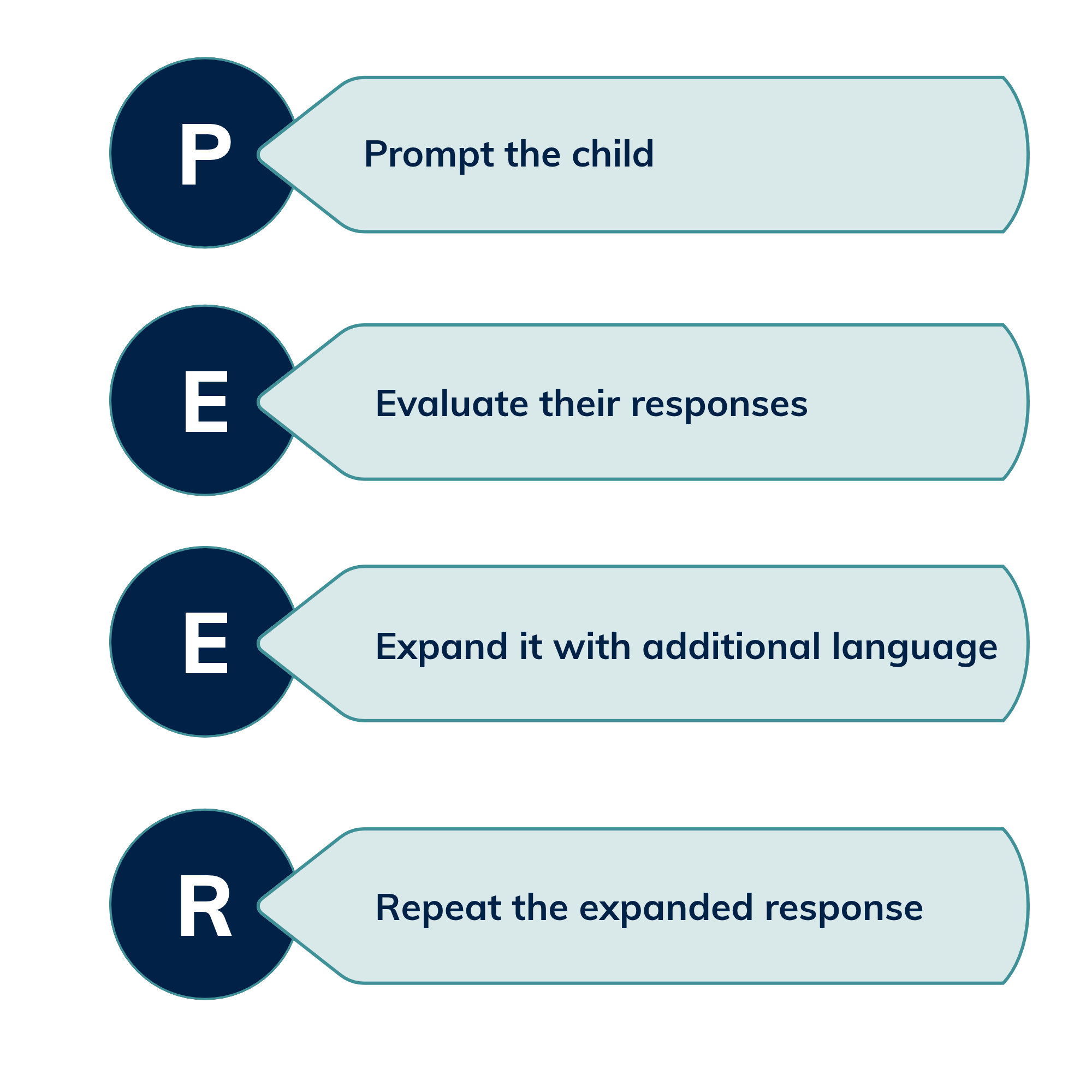
PEER provides a simple framework for responding to children's contributions:

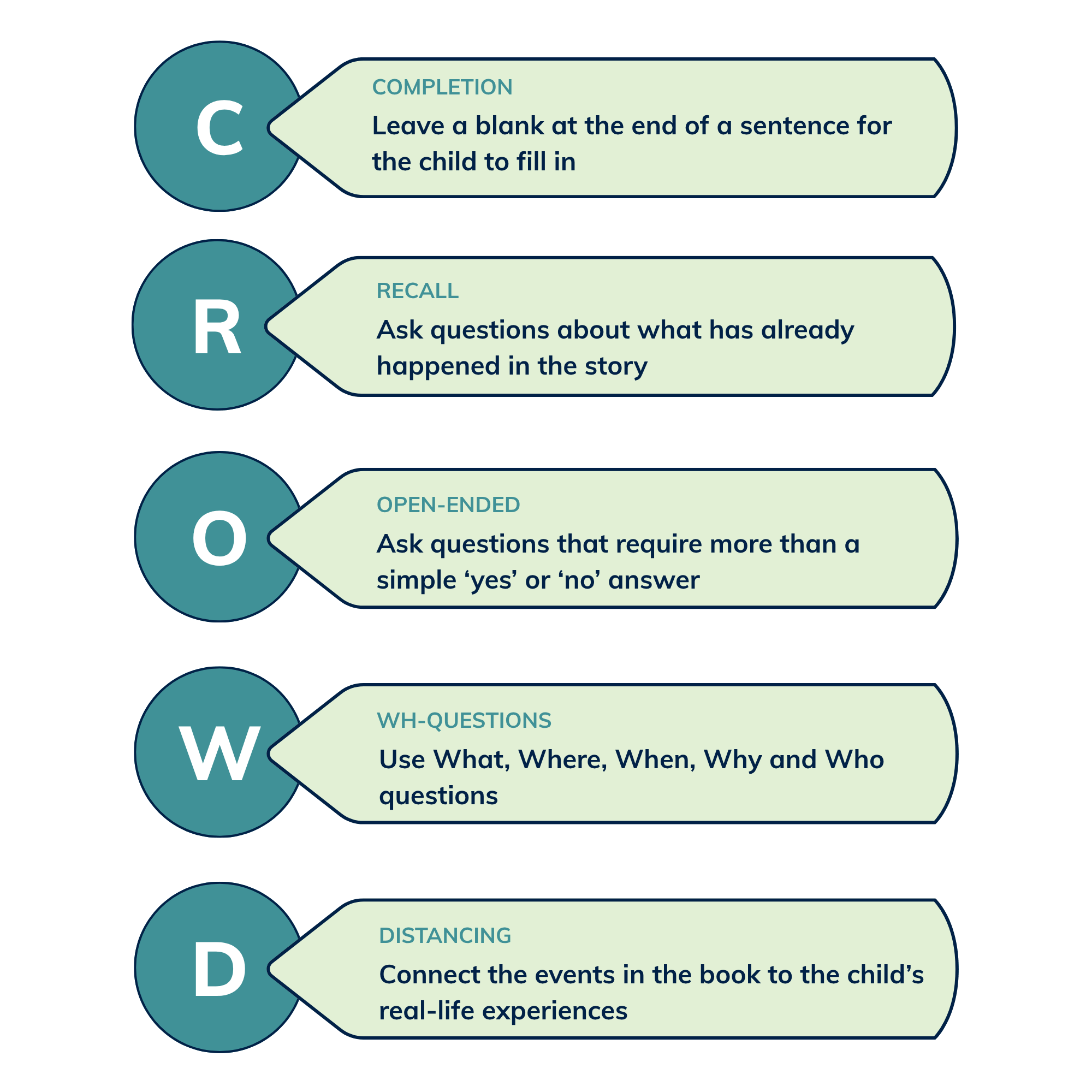
CROWD provides a range of prompts to encourage children to participate:

PEER
Whitepaper front cover (7)

Used consistently, these techniques help turn story time into an opportunity for children to practice vocabulary, sentence construction and narrative skills.

These strategies work best when layered together. A CROWD prompt starts the PEER sequence, and if the child makes a speech or grammatical mistake during the interaction, you can gently model the correct form or expand on what they’ve said.

Why does oral language matter?

Oral language encompasses the skills children use to understand and communicate through spoken language, including vocabulary, listening and comprehension.

These skills are the foundational to literacy development. Reading comprehension requires children not only to decode the words they see, but also to understand the meaning of those words.

Giving oral language intentional attention alongside existing literacy instruction can help ensure children have opportunities to develop both sides of this process.

Looking for more targeted language support?

For some children, whole-class language support may not be enough. TEL-Ted provides targeted oral language intervention for children who need additional help developing their language skills.

Designed for children aged 4–7, TEL-Ted uses structured, evidence-informed activities to build key areas of oral language, including vocabulary, listening and understanding, and speaking.

It can be used alongside your existing classroom practice to give children who need it more focused support.

Ted

Frequently asked questions

What is meant by intentional language instruction?

Intentional language instruction means creating purposeful opportunities for children to develop their oral language skills throughout the school day. Rather than leaving language development to chance, educators deliberately model, introduce and extend language through conversations, activities, stories, and everyday classroom interactions. 

How can I intentionally support oral language in my classroom?

Small changes to everyday classroom practice can create more opportunities for language development. This might include introducing and revisiting new vocabulary, giving children more time to respond, encouraging purposeful talk, asking questions that extend conversation, and modelling richer language.

The key is to make these opportunities deliberate and consistent across the school day.

Do I need a separate lesson to support oral language?

Not necessarily. Oral language can be developed throughout existing classroom routines, lessons, play, and shared reading. Making these interactions more intentional can help children hear, understand, and use a wider range of language without adding another standalone lesson to the timetable. 

How can I take oral language support further?

 Everyday intentional language strategies are an important part of supporting children’s language development. A systematic approach can build on this foundation, helping schools identify oral language needs early, including those that might otherwise go unnoticed, and ensure every child has the opportunity to succeed. 

Get Ready for Language provides short, whole-class activities designed to strengthen language skills and support school readiness. For children who need more focused help, TEL-Ted provides targeted oral language intervention for children aged 4–7.

Together, these approaches help schools embed oral language support across the classroom while providing additional, targeted support where it is needed. 

Why is oral language important for reading?

Reading involves more than being able to decode the words on a page. Children also need to understand the meaning of those words.

Vocabulary, listening comprehension, and broader language skills all contribute to reading comprehension, which is why developing oral language alongside decoding helps to build stronger foundations for literacy.

Which children benefit from intentional language instruction?

All children can benefit from rich and purposeful opportunities to hear and use language. Intentional language instruction can be particularly valuable for children who enter school with less developed oral language skills or who need additional opportunities to build vocabulary, listening and speaking skills.

Taking a whole-class approach means language development becomes part of everyday teaching rather than something reserved only for children already identified as needing additional support.